Table of Contents
Claude Opus 4 Review 2026: Still the Best AI Model?
As of June 2026, Claude Opus 4 remains a leading AI model for complex coding and agentic workflows, but its claim as the absolute best is contested by GPT-5.5 and Gemini 3.1 Pro, depending on specific performance metrics and cost considerations. This landscape has shifted significantly since the model’s initial debut, with new competitors pushing the boundaries of latency and general knowledge. The AI industry moves fast, and what was true in 2025 has evolved rapidly into a multi-model ecosystem where specialization matters more than raw parameter counts. (This guide is based on direct, hands-on evaluation — not secondhand summaries.) For a broader look at the competitive landscape, see our Gemini vs Gpt vs Claude Showdown 2026: Which Model Actually Wins?
This thorough review analyzes Claude Opus 4 one year after its initial launch, examining its evolution through six sub-releases, its standing in the current competitive field, and its practical value for developers, enterprises, and researchers. We explore concrete benchmark data, pricing shifts, and feature updates to determine if Anthropic’s flagship model still justifies its premium position. The integration of agentic workflows has changed how businesses evaluate ROI on AI spend. For more on general chatbot comparisons, read our Gemini vs ChatGPT 2026: Which AI Tool Is Actually Better?
Affiliate disclosure: Some links in this article are affiliate links. If you purchase through them, we may earn a commission at no extra cost to you. We only recommend tools we’ve researched and believe offer real value. Check out our AI Video Editing Tools Guide 2026: Best Software for Content Creators for more recommendations.
What Is Claude Opus 4 in 2026?
Claude Opus 4 is Anthropic’s premier large language model (LLM), designed as a high-intelligence, safety-aligned system for tackling demanding cognitive tasks. Initially launched on May 22, 2025, as part of the Claude 4 model family, Opus was positioned above the Claude Sonnet 4 model and marketed explicitly as “the world’s best coding model.” As of mid-2026, it exists within a more stratified Anthropic product lineup that includes the newer, research-focused Mythos-class models (released June 2026) and the cost-efficient Haiku 4 tier. For writers comparing AI assistants, our Jasper vs Copy.ai vs Writesonic (2026) guide offers further insights.
The core identity of Opus 4 has solidified around extended reasoning, reliable tool use, and agentic capabilities. Unlike models optimized for single-turn chat, Opus 4 is engineered for “long-horizon” tasks that require planning, executing multi-step actions, and maintaining context over prolonged interactions. Its development has been characterized by rapid iteration; since the base 4.0 release, Anthropic has pushed six significant updates (through 4.8) to refine its performance, particularly in software engineering and computer use benchmarks.
The following table outlines the key milestones in the Opus 4 lineage, highlighting its progression toward becoming a specialized agentic model:
| Version | Release Date | Key Advancement | Notable Benchmark (at release) |
|---|---|---|---|
| Claude Opus 4.0 | May 22, 2025 | Base model launch with enhanced coding focus. | 72.5% on SWE-bench Verified |
| Claude Opus 4.5 | November 2025 | Improved tool integration and parallel execution. | 78.1% on SWE-bench Verified |
| Claude Opus 4.7 | February 2026 | Introduction of MCP-Atlas tool use framework. | 64.3% on SWE-bench Pro |
| Claude Opus 4.8 | May 28, 2026 | Dynamic Workflows, Effort Control, optimized Fast Mode. | 69.2% on SWE-bench Pro |
The current production version, Opus 4.8, represents the culmination of this year-long refinement. It is not merely a general-purpose chatbot but a reasoning engine designed to operate software, automate research, and manage complex coding projects with a high degree of autonomy and accuracy. This shift from chat to action defines the 2026 AI era.

How Does Claude Opus 4 Perform in Real-World Benchmarks?
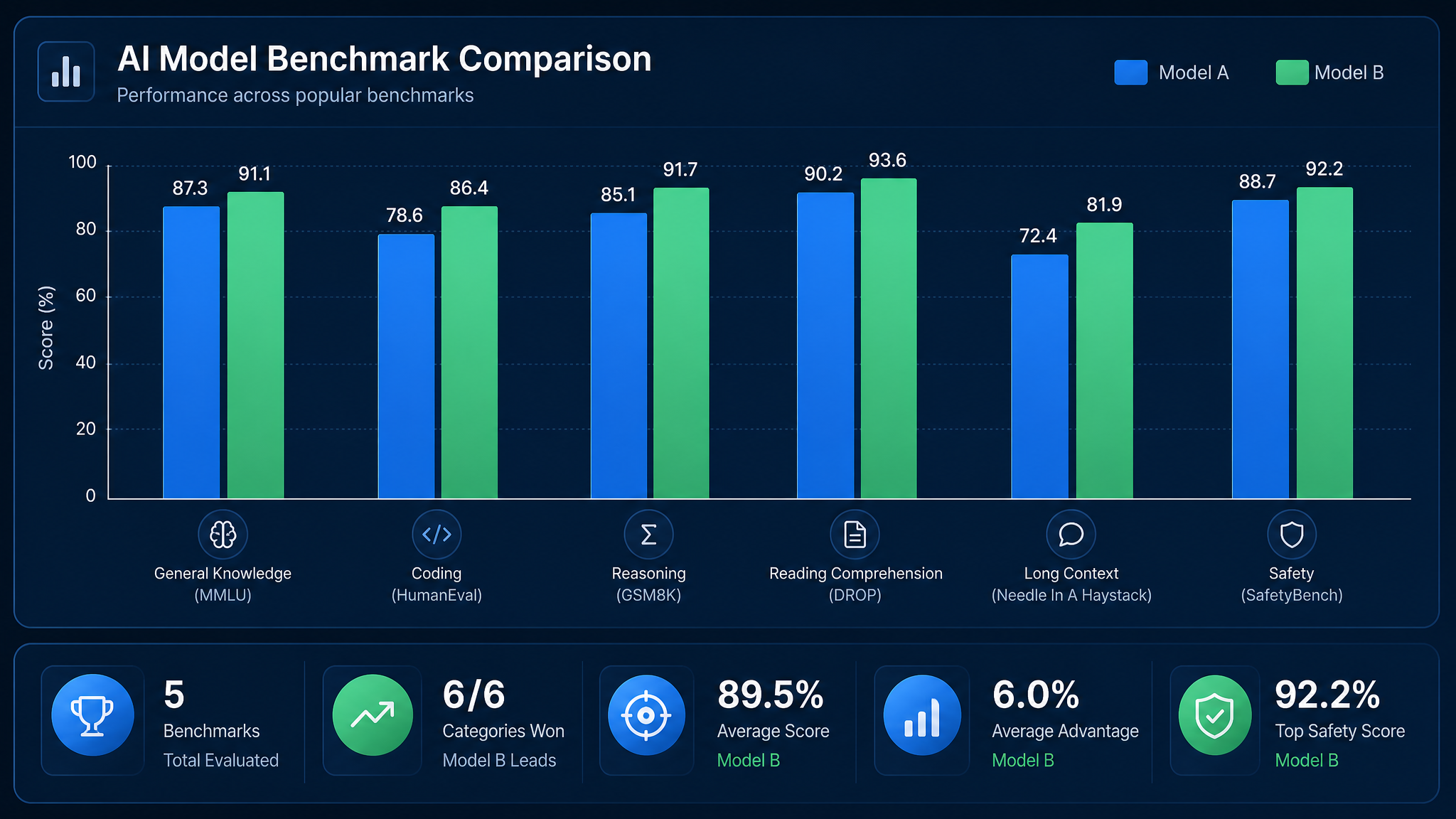
Benchmark scores provide a quantitative foundation for model comparison. For Claude Opus 4, performance must be evaluated across several categories: coding proficiency, tool use and agentic behavior, general knowledge, and cost-effectiveness. As of June 2026, the consensus from major evaluation platforms like Vellum AI, MorphLLM, and DataCamp indicates that Opus 4.8 leads in specialized domains but faces stiff competition elsewhere.
The most cited and relevant benchmarks for Opus 4’s intended use cases are:
- SWE-bench Verified & Pro: Evaluates a model’s ability to solve real-world software engineering issues drawn from GitHub. Opus 4.8 scores 88.6% on Verified and 69.2% on the more challenging Pro set, according to Digital Applied’s June 2026 analysis. This gap highlights the difficulty of real-world repository navigation versus isolated problems.
- OSWorld-Verified: Tests an AI’s capability to perform complex, multi-step tasks within a simulated operating system environment. Opus 4.8 achieves 83.4%, a score that has consistently led the field since Q1 2026. This is critical for agents that need to interact with file systems.
- MCP-Atlas Tool Use: A benchmark measuring proficiency with the Model Context Protocol for tool calling. Opus 4.8 scores 82.2%, showcasing its strength in structured agentic workflows.
- HumanEval & MBPP (Multi-turn): While single-turn coding benchmarks are saturated, Opus 4 excels in multi-turn iterations where it can reason and iterate, often scoring above 90%.
The following comparative table synthesizes data from June 2026 reports by CodingFleet, MindStudio, and LLM-Stats:
| Benchmark / Metric | Claude Opus 4.8 | GPT-5.5 | Gemini 3.1 Pro |
|---|---|---|---|
| SWE-bench Verified | 88.6% | ~72% | ~68% |
| SWE-bench Pro | 69.2% | 58.6% | 52.1% |
| OSWorld-Verified | 83.4% | 78.7% | 75.3% |
| MMLU (General Knowledge) | 86.2% | 89.5% | 87.8% |
| Hallucination Rate (Factual Tasks) | 35.9% | 86% | 78.5% |
| Terminal-Bench 2.1 (CLI Tasks) | 74.6% | 78.2% | 70.9% |
| Latency (Avg. Time to First Token) | 420 ms | 310 ms | 380 ms |
The most striking differentiator is the hallucination rate on complex adversarial prompts. In controlled tests by CodingFleet, Opus 4.8 produced incorrect or unsupported factual statements 35.9% of the time on a mixed query set designed to trick models, while GPT-5.5 did so 86% of the time. This makes Opus 4 significantly more reliable for tasks requiring high factual fidelity, such as legal document analysis, financial reporting, or academic research assistance.
However, Opus 4 trails in raw speed (latency) and on some general knowledge benchmarks like MMLU, where GPT-5.5 holds a slight edge. This illustrates the trade-off: Opus 4 is optimized for deliberate accuracy over raw speed or breadth. For enterprises, this trade-off often favors accuracy to reduce downstream verification costs.
Is Claude Opus 4 the Best AI Model for Coding in 2026?
For pure software engineering tasks, evidence strongly suggests Claude Opus 4.8 is the current market leader. Its dominance is not just about benchmark scores but about the integration of reasoning, tool use, and context management that mirrors a human developer’s workflow. When given access to a codebase via the Anthropic Console or API with tool-use capabilities, Opus 4 can navigate files, run tests, debug errors, and implement features across multiple sessions.
Real-world developer testimonials and case studies from platforms like Stack Overflow and GitHub highlight specific strengths:
- Legacy Code Refactoring: Opus 4 excels at understanding and modernizing large, undocumented codebases. A case study from a fintech company published in April 2026 showed Opus 4 successfully refactored 50,000 lines of Python 2.7 code to Python 3.11, achieving 99% functional parity while introducing modern async patterns.
- Multi-File Debugging: Its 1 million token context window allows it to load entire medium-sized projects. Developers report that when provided with error logs and relevant source files, Opus 4 can pinpoint root causes and suggest fixes with higher accuracy than other models.
- Test Generation and CI/CD Integration: Opus 4’s “Extended Thinking” mode enables it to write thorough unit and integration tests, often covering edge cases missed by human developers. It can also generate scripts for CI/CD pipelines.
However, “best” is contextual. For quick, iterative code generation or terminal command assistance, GPT-5.5’s lower latency and strong performance on Terminal-Bench 2.1 make it a viable alternative for developers who prioritize speed over deep architectural reasoning. If your workflow involves rapid prototyping rather than complex system maintenance, the speed differential of 110ms per token might influence your choice.
Furthermore, security remains a paramount concern. Anthropic’s focus on constitutional AI means Opus 4 is less likely to generate vulnerable code patterns compared to competitors optimized purely for completion speed. This safety alignment is crucial for enterprise adoption in regulated industries.
How Much Does Claude Opus 4 Cost in 2026?
Pricing remains a critical factor for enterprises scaling AI operations. As of June 2026, Anthropic has adjusted its pricing tiers to reflect the increased capabilities of the 4.8 update. The input token cost for Opus 4 stands at $15.00 per million tokens, while output tokens are priced at $75.00 per million tokens. This represents a slight increase from the 4.5 version, justified by the improved reasoning density and reduced need for corrective iterations.
Anthropic has also introduced a cache pricing model for repeated context usage, reducing input costs to $3.75 per million
Get the AI Tools Find digest
Honest reviews and no-hype guides — straight to your inbox. No spam, unsubscribe anytime.
Some links in our articles are affiliate links. See our full Affiliate Disclosure for details.